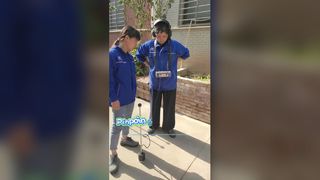
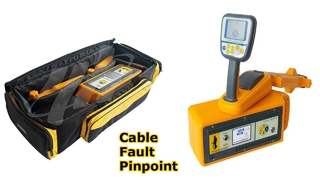
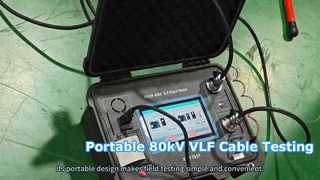
Breve: Discover how the Cable Fault Locator XHSB505DS works in this informative video. You will see a detailed walkthrough of its operation for both live and power-off cable identification, learn how to use the flexible current clamp correctly to avoid measurement errors, and understand the PSK technology and precise algorithm that ensure accurate fault finding and cable identification for technicians.
Características De Productos Relacionados:
Utiliza la tecnología PSK combinada con un algoritmo preciso para la identificación precisa de cables y la detección directa de fallas.
Cuenta con múltiples frecuencias de transmisión para la identificación en vivo (625Hz, 1562Hz, 2500Hz, 10000Hz) y la identificación de apagado (1562Hz, 2500Hz).
Allows adjustment of transmission frequency using up and down arrow keys for flexible operation.
Includes a 3-meter transmission line for convenient on-site use.
Equipped with a large LCD screen that displays remaining battery voltage in real time and includes a backlight.
Comes with a Φ200mm flexible current clamp for wrapping around cables, with directional arrows for correct signal input.
Designed for identifying power-out cables by ensuring the current clamp arrows point to the far end where the cable core is grounded.
Provides clear operational guidelines to avoid errors, such as not placing the cable near the coil connector during measurement.
Las preguntas:
What is the purpose of the Cable Fault Locator XHSB505DS?
The XHSB505DS is a specialized tool designed for cable technicians to solve technical challenges in cable identification and direct fault finding, ensuring accurate dual numbering at both ends of the cable.
How does the instrument handle live and power-off cable identification?
It uses specific transmission frequencies: for live identification, it operates at 625Hz, 1562Hz, 2500Hz, and 10000Hz; for power-off identification, it uses 1562Hz and 2500Hz, adjustable via up and down arrow keys.
What should be considered when using the flexible current clamp for identification?
Ensure the arrows on the flexible current clamp point to the far end of the cable (where the cable core is grounded) to correctly input the pulse-coded current signal, and avoid placing the cable near the coil connector to prevent measurement errors.